
Concrete Driveways
New concrete driveways, extensions and crossovers built for Noosa's coastal and hinterland blocks. Plain, exposed, coloured or stamped finishes. Call Noosa Concreters today!
Learn More →
Permeable concrete and paving that lets stormwater soak away, reducing runoff and pooling on Noosa properties. Contact Noosa Concreters today!
Request a Free Quote
Permeable paving in Noosa lets rainwater drain straight through your driveway, path or courtyard instead of running across it. We build it two main ways: no-fines pervious concrete, which is poured with little or no sand so it sets with open voids, and permeable interlocking pavers laid with open joints filled with fine crushed aggregate. Both sit on a deep bed of open-graded crushed rock wrapped in geotextile fabric, which holds stormwater and releases it slowly into the ground. If you've watched a summer storm send a sheet of water across your slab toward the garage or the neighbour's fence, this is the fix.
Local ground conditions decide how we build it. Sandy coastal blocks around Noosaville, Sunshine Beach and Peregian usually drain freely, so the sub-base mostly stores water while it soaks away. Clay soils in the hinterland around Cooroy, Pomona and Eumundi drain much more slowly, so we often build a deeper storage layer and may add a slotted overflow pipe to carry the extra water to a legal discharge point. Blocks near the river or canals can sit on a high water table, and we check that before we commit to a design.
Permeable paving works well beside other surfaces too. Plenty of clients pair a pervious parking bay or side strip with a standard concrete driveway, or run permeable pavers through an entertaining area that joins onto paths and patios. We'll walk the site with you, work out where the water wants to go, and give you a clear quote for the system that suits your block.
From soil testing to the final infiltration check, here's what happens on site.
We look at your soil type, the fall of the block, downpipe locations and where stormwater currently pools. On clay sites or low-lying blocks near the river, we dig a test hole to see how fast water soaks away and how close the water table is. That tells us how deep the storage base needs to be and whether an overflow is required.
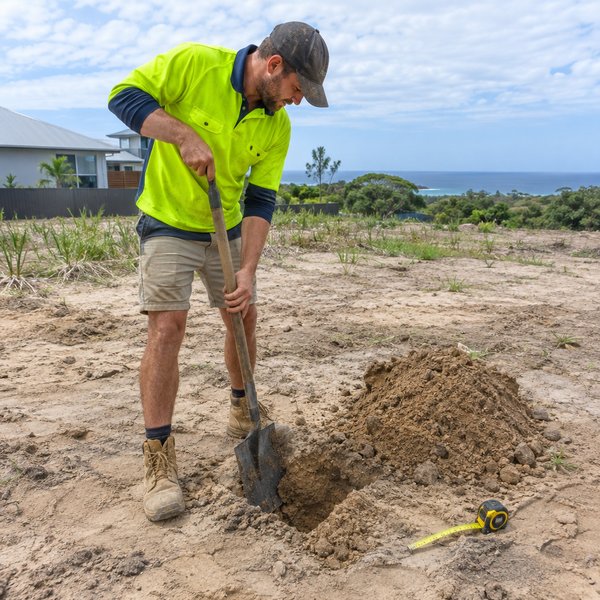
We excavate to the design depth and lay geotextile fabric to keep the surrounding soil from migrating into the base. Clean crushed rock with no fines goes in next, compacted in layers with a plate compactor. This rock layer is the reservoir that holds storm runoff while it drains away.
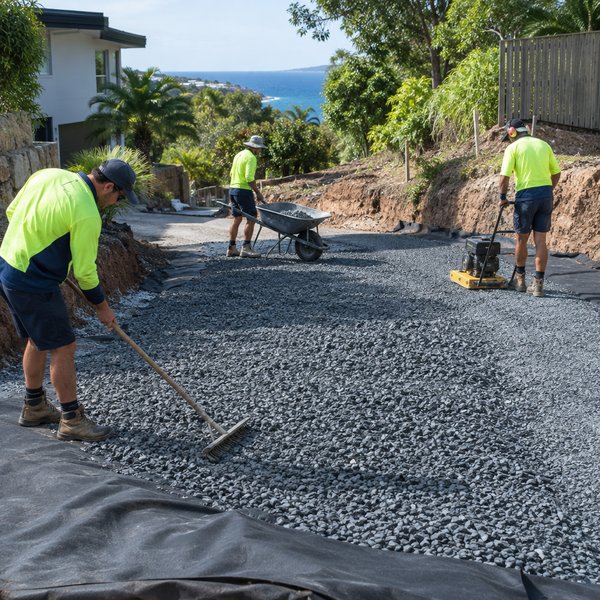
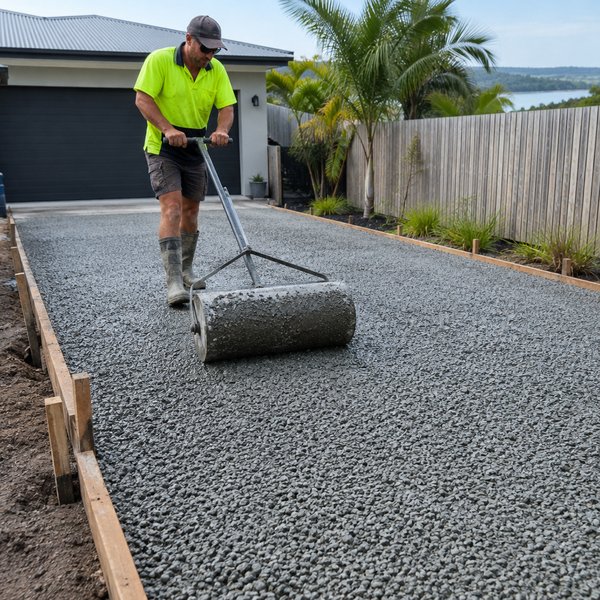
For pervious concrete, we place the no-fines mix quickly and compact it with a roller rather than floating it, because floating would seal the surface voids. For paver systems, we screed a bedding layer of fine aggregate, lay the pavers with spacer lugs and sweep chips into the open joints. Edge restraints go in to hold everything tight.
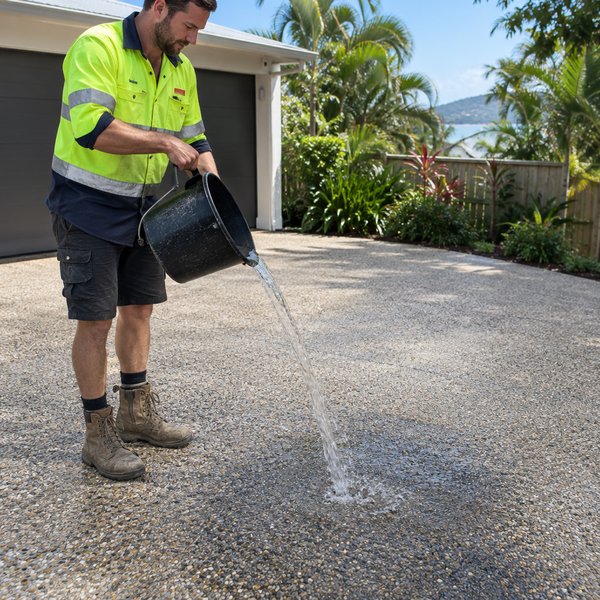
Pervious concrete has low water content, so we cover it with plastic sheeting straight away to stop it drying out too fast in the Queensland heat. Once it has cured, we pour water across the surface to confirm it drains through freely. We then show you how to keep the surface clear of sand, leaves and grass clippings.
Practical gains you'll notice the first time a summer storm rolls through.
Rain soaks into the paving instead of sheeting toward your garage, house slab or boundary. That means fewer puddles at the front door and less water spilling into your neighbour's yard during summer downpours.
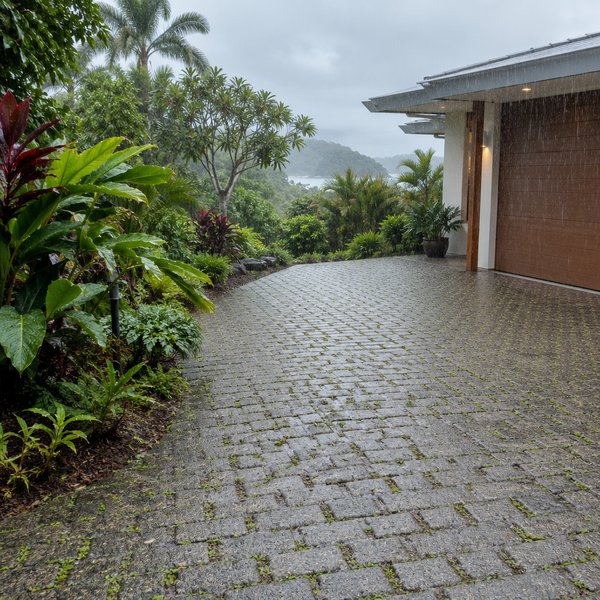
Water doesn't sit on top, so you don't get the slippery film that forms on smooth slabs after rain. That suits pool surrounds, holiday rentals and sloping paths where guests walk in thongs or bare feet.

Stormwater returns to the soil instead of being piped away, so lawns, garden beds and tree roots beside the paving get more moisture. Roots are also less likely to lift the surface, because they aren't fighting for water under a sealed slab.
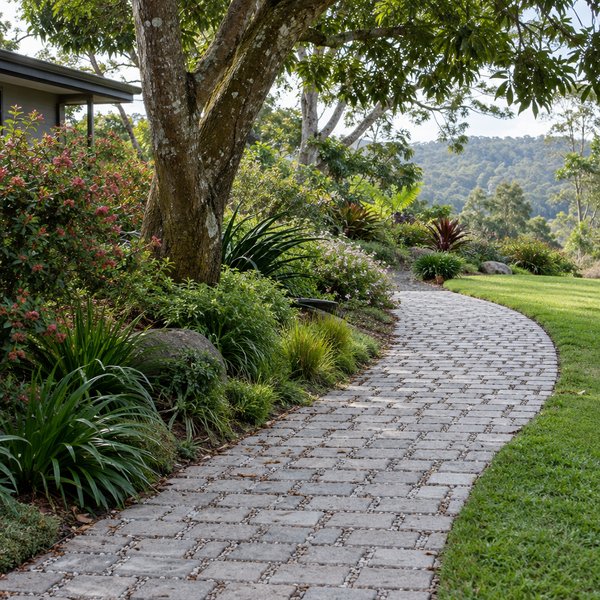
Coastal sand and hinterland clay behave very differently under permeable paving. We check drainage on site and size the storage base to suit, so you don't end up with a surface that floods in a summer storm.
No-fines concrete sets fast and can't be floated or troweled like a normal slab. We place, roll and cover it quickly so the voids stay open and the surface stays strong in Queensland heat and humidity.
We handle excavation, sub-base, formwork, concrete and pavers ourselves. That makes it simple to join permeable sections into a new driveway, slab, path or patio without different trades getting in each other's way.
Permeable paving needs some care to keep draining, especially with sand, leaf litter and mould in our climate. We tell you honestly what it takes and whether a standard slab with good falls might suit you better.
Common questions answered
Yes, but it needs a different design. Clay drains slowly, so we usually build a deeper rock storage layer and add a slotted overflow pipe that carries excess water to a suitable discharge point. We test how your soil drains before quoting so the system matches your block.
The main factors are the area, whether you choose pervious concrete or permeable pavers, how deep the sub-base needs to be for your soil, and how easy the site is to access for excavation and concrete trucks. Removing an old slab or adding overflow drainage also adds to the job. We price each site after an inspection rather than guessing.
It can, especially near the beach where sand blows in or gets tracked in on feet and tyres. Leaves, mulch and grass clippings cause the same problem. A regular sweep and an occasional vacuum sweep or low-angle pressure clean keep the voids open, and we'll show you what to look for.
It depends on the mix, the weather and how heavy your vehicles are. Pervious concrete needs to stay covered and cure properly before it takes traffic, and hot or humid conditions change how it behaves. We'll give you a clear timeframe for your job before we pour.
Permeable surfaces can reduce the stormwater coming off your site, which may help on blocks with drainage or site-cover limits. Requirements vary by property, so check with Noosa Council or your certifier for your situation. We're happy to provide details of the system we're building to support that conversation.
We provide Permeable Paving throughout Noosa, QLD and surrounding suburbs.
Don't see your area? Contact us to check if we service your location!
View All Areas