
Concrete Driveways
New concrete driveways, extensions and crossovers built for Noosa's coastal and hinterland blocks. Plain, exposed, coloured or stamped finishes. Call Noosa Concreters today!
Learn More →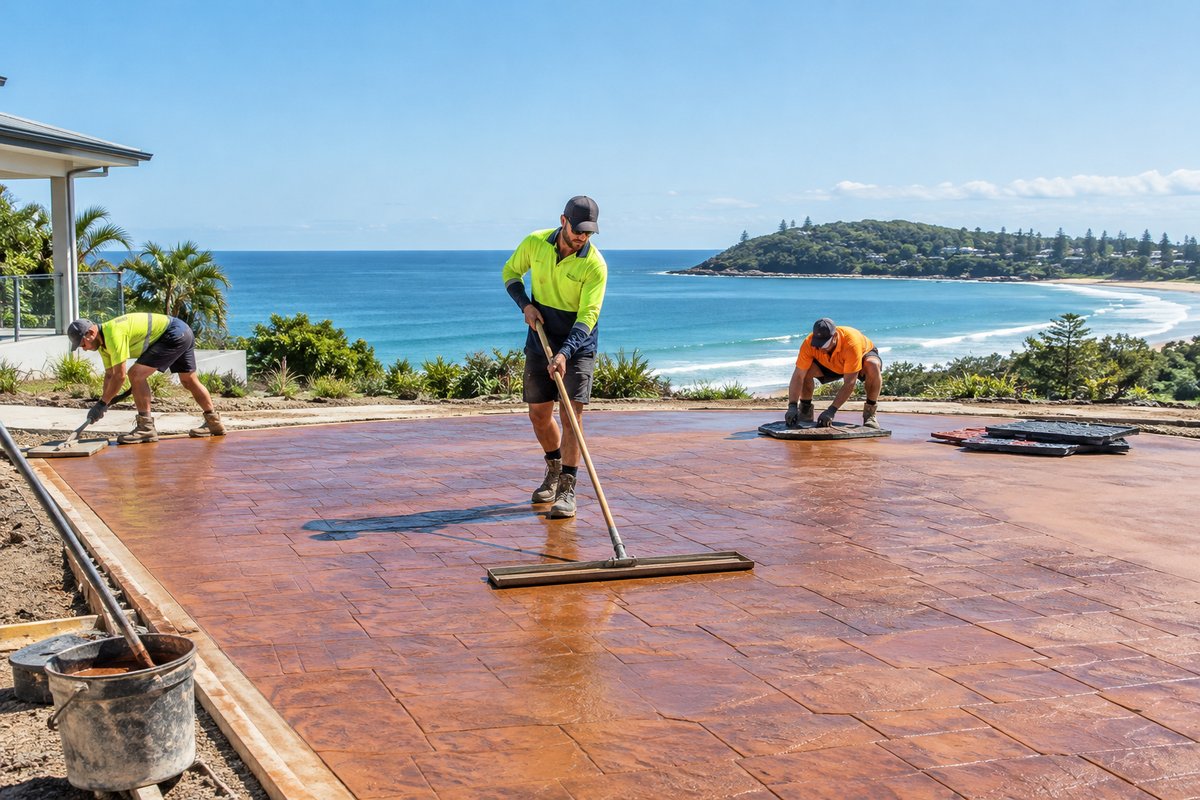
Sick of plain old grey? Coloured, stamped and stencilled concrete adds style to driveways, patios and paths without giving up strength. Contact Noosa Concreters today!
Request a Free Quote
Coloured and stamped concrete in Noosa gives you the look of stone, slate, timber or cobbles without the loose joints that pavers can develop over time. We pour a structural slab, then work colour into the surface with integral oxide pigment in the mix, a dry-shake colour hardener, or both. Once the concrete reaches the right stage, we lay texture mats over it and tamp them in by hand. A contrasting release agent adds the shading in the grout lines and low spots, which gives the finish its natural, weathered look.
Noosa's climate shapes how we do the job. High humidity and heavy summer storms mean we watch the forecast closely and plan pours around the afternoon build-ups. Sealer is chosen carefully, because the wrong product can trap moisture and turn cloudy or white in our muggy conditions. Strong UV and salt air near the beach also wear down a cheap sealer quickly, so we use products suited to coastal exposure. Near the water we often deal with sandy soil, and in the hinterland it is usually reactive clay, so we prepare the base to suit the ground on each site.
A common job for us is a tired pool surround that gets hot underfoot and slippery when wet. We replace it with a lighter stamped slate finish that has a grit additive mixed into the sealer for better grip. Some clients want a stamped centre section framed by a plain or brushed border, or a stamped entry that leads up to a new concrete driveway. If you prefer a stone-studded finish over a pattern, we also lay exposed aggregate and can talk you through the differences on site.
From base preparation to the final coat of sealer, here is what happens on site.
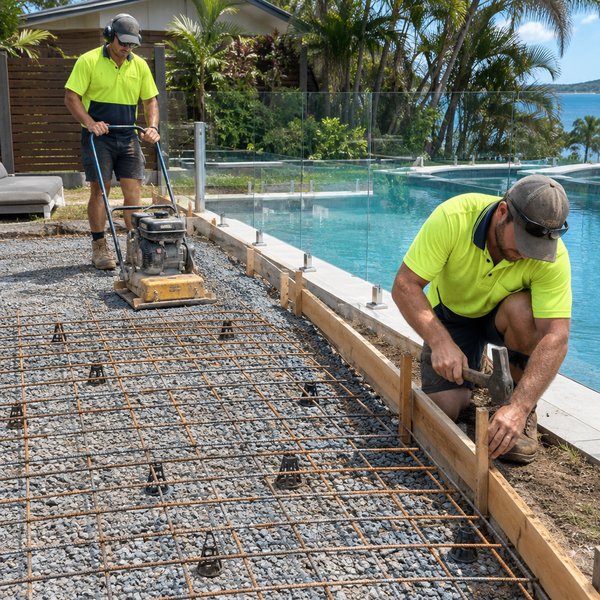
We excavate, compact the base and set formwork to the levels and falls needed to move storm water away from your house and pool. Steel mesh or bar goes in on chairs so it sits in the right spot within the slab. In sandy coastal soils we focus on compaction, and on hinterland clay we look at moisture and movement before we pour.
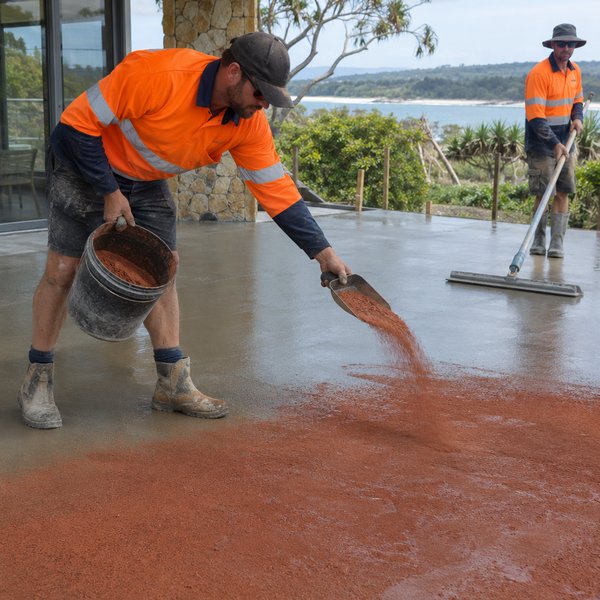
The concrete arrives either pre-coloured with oxide or plain, depending on the system we have agreed on. We screed and bull-float the surface, then broadcast colour hardener by hand and float it in for an even, dense top layer. Timing matters here, especially on humid days when the concrete sets at its own pace.
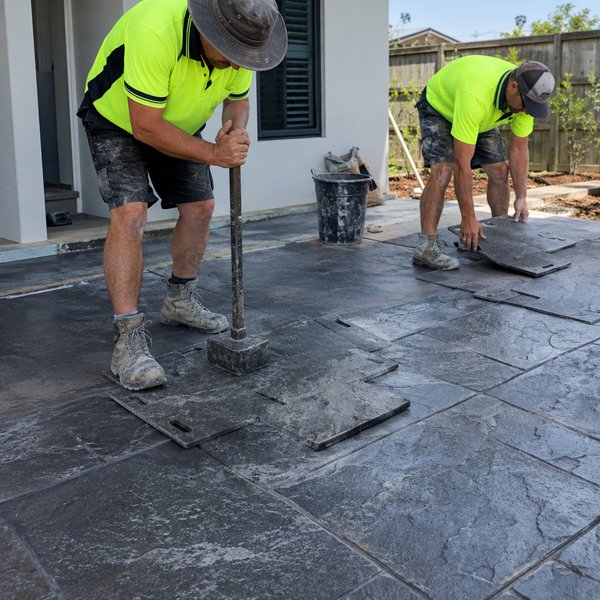
We dust the surface with contrasting release, lay texture mats in sequence and tamp them in so the pattern lines up from one edge to the next. Edges and corners that the mats cannot reach are detailed by hand with flexible skins and tools. Control joints are tooled or saw-cut where they will blend into the pattern.
Once the slab has cured enough, we pressure wash off the excess release to show the shading in the texture. After the surface is properly dry, we apply a sealer suited to Noosa's humidity and UV, adding grit where you need grip. We then explain how long to keep foot traffic and vehicles off, based on the weather during curing.
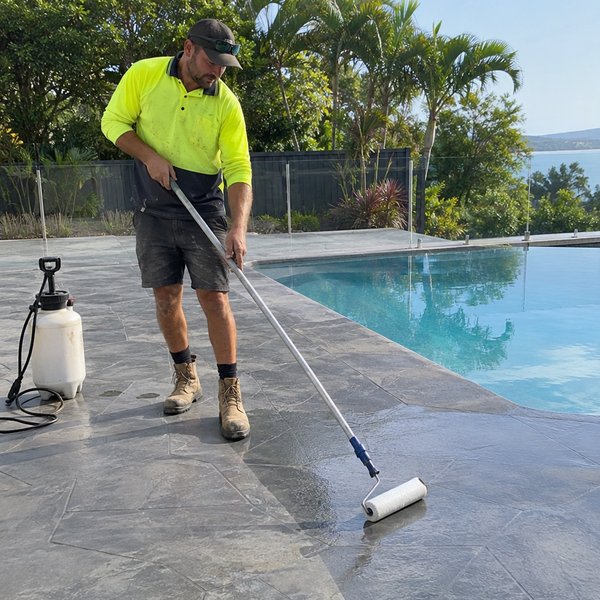
Practical gains you will notice in the subtropical sun and rain.
Your patio or entry gets the character of slate or cobblestone on one continuous reinforced slab. There are no sand joints for ants to dig out or weeds to grow through after a wet summer. You also avoid single pavers lifting or sinking as the ground underneath moves.
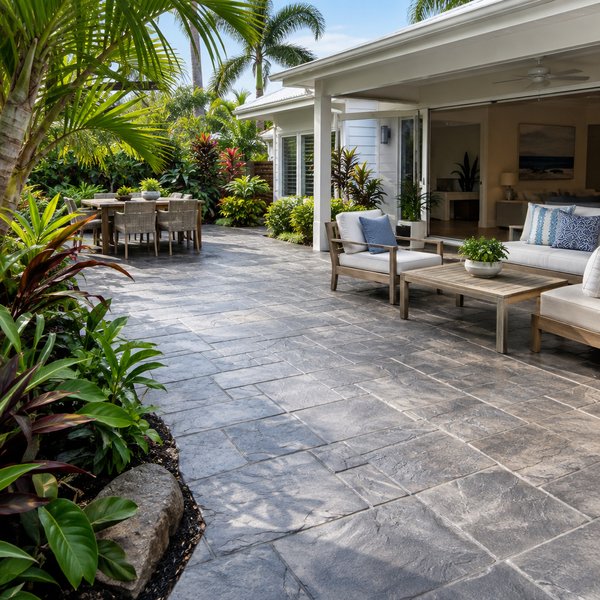
Lighter colours stay more comfortable underfoot in the Queensland sun than dark finishes do. A grit additive in the sealer gives wet feet more grip around the pool. Kids and guests can move around the water with less risk of slipping.
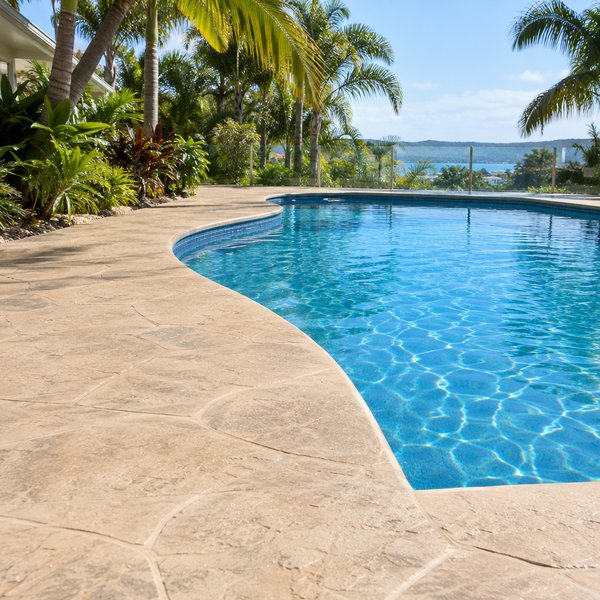
Oxide colour through the mix and a hardened top layer mean small scuffs do not expose grey concrete underneath. A suitable sealer helps protect against UV fading, salt air and the mould that grows in humid, shaded areas. With regular resealing, the surface keeps its colour and is easy to hose clean.
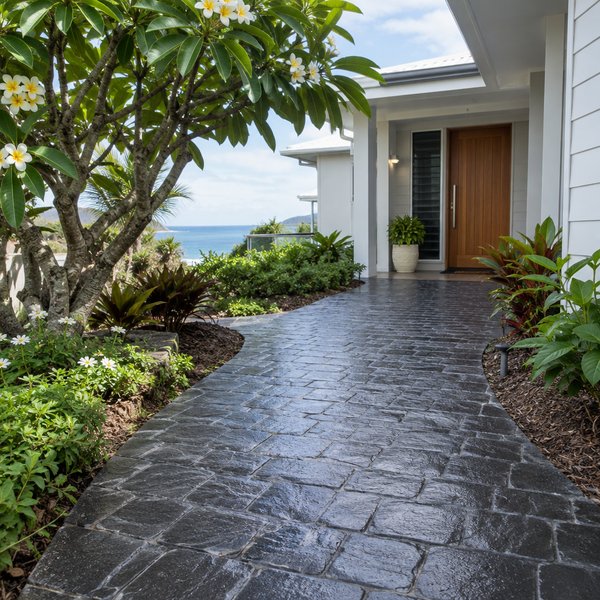
We have seen what happens when a sealer that suits a dry climate goes down in muggy coastal weather. We match the sealer type and application conditions to your site to reduce blushing, mould growth and early wear.
We plan where mats start, how the pattern meets the edges and where control joints will sit before any concrete arrives. That way the joints blend into the grout lines and the pattern runs cleanly through doorways and around pool coping.
Sandy coastal sites and reactive hinterland clay need different preparation. We look at drainage, compaction and soil type so your decorative slab stays level and the stamped finish does not crack along weak points.
Because we also pour driveways, slabs, paths and permeable paving, we can tie a stamped area into the rest of your outdoor job. You deal with one crew for the levels, drainage and finishes across the whole property.
Common questions answered
It depends on how much sun the area gets, how much traffic it carries and which sealer was used. Pool surrounds and exposed north-facing areas usually wear faster than shaded patios. When the colour starts to look dull or water stops beading on the surface, it is time to reseal, and we can do that for you.
That is usually sealer blush, caused by moisture trapped under or within the sealer, and it is common in humid coastal weather. Sometimes it clears as the sealer breathes, but often the old sealer needs to be stripped or reactivated with solvent and then resealed. We check the cause before recommending a fix.
A smooth sealed surface can be slippery when wet, which is why we add an anti-slip grit to the sealer on pool surrounds, steps and sloping paths. A deeper texture pattern such as slate or flagstone also helps with grip. We can show you samples so you can feel the difference.
The main factors are the total area, site access, how much excavation and base preparation is needed, and the slab thickness and reinforcement. The colour system also affects price, as do the number of stamp patterns or borders and any removal of old concrete or pavers. We give you a written quote after looking at the site.
Heavy rain on fresh concrete can wash out colour and damage the stamped texture, so we plan pours around the forecast and keep plastic sheeting on site. If a storm looks likely, we reschedule instead of risking the finish. During the wet season this may mean being a little flexible with dates.
We provide Coloured & Stamped Concrete throughout Noosa, QLD and surrounding suburbs.
Don't see your area? Contact us to check if we service your location!
View All Areas